
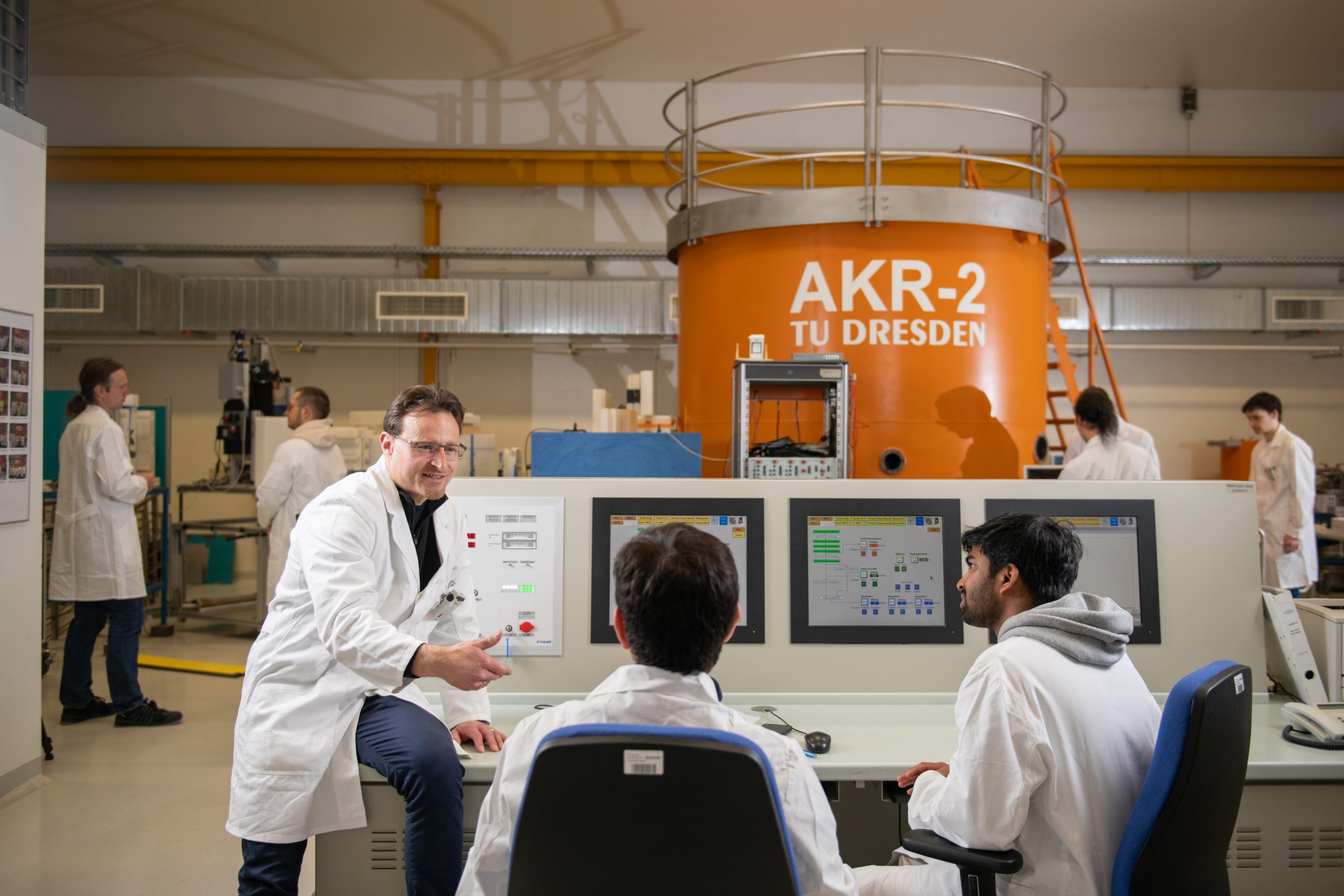
The circular economy is about making the most of valuable resources and keeping them in use for as long as possible. Why shouldn’t the same principle apply to spent nuclear fuel? A research project in Saxony, Germany, is exploring how the materials and energy it contains could be put to further use.
What is currently stored as high-level radioactive waste and destined for eventual geological disposal still contains substantial amounts of usable energy. This is because conventional nuclear power plants only harness a small fraction of the energy potential contained in nuclear fuel.
This is precisely where NuCycle, a research project at TU Dresden, comes in. Based on the innovative iMAGINE concept, the project explores how spent nuclear fuel could be reused in an advanced molten salt reactor. At the same time, the aim is to transform long-lived radioactive materials and thereby reduce the requirements for their eventual disposal.
What is considered waste today could become a valuable resource. The approach combines the principles of the circular economy with advanced nuclear technology: making better use of existing resources, reducing the amount of remaining waste and unlocking new opportunities for energy generation.
The technology is still under development. A demonstration project will be needed to establish whether, and to what extent, the expected benefits can be achieved in practice. If successful, the technology could also create new opportunities for research, industry and technological value creation in Germany.
Download the atw Special Edition PDF (German only)
The atw Special Edition of November 2026 takes an in-depth look at this pioneering project in Saxony. The authors explain the scientific foundations, the proposed development pathway and the technological challenges involved.
Discover how the idea of making the most of existing resources rather than wasting them could open up new perspectives for nuclear technology.